
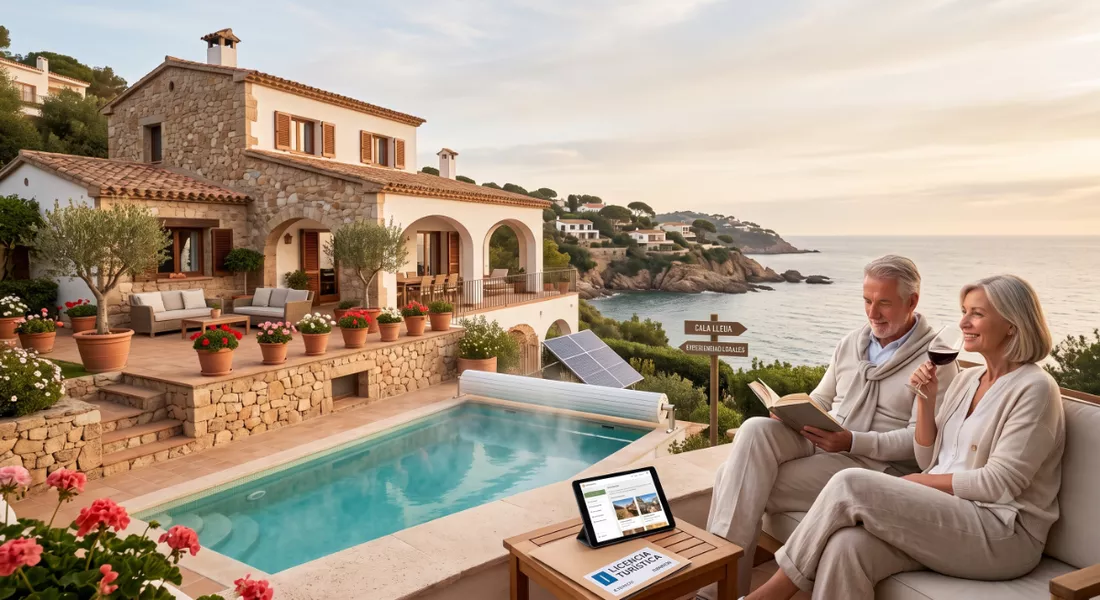
Having a second home on the coast is, without doubt, a privilege, but it also entails a series of fixed costs that should not be overlooked. For the vast majority of owners who hold a tourist rental license, the primary goal is not to squeeze the property to obtain the highest commercial return, but rather a much more pragmatic objective: covering the maintenance costs of their holiday home. If we consider that an average owner enjoys their property for between four and six weeks a year, the rest of the calendar offers very interesting income potential. Smart management of this available time not only helps cover utilities and taxes, but also opens the door to reinvestment and the ongoing improvement of the property.
The Challenge of Seasonality and Fierce Competition
The holiday rental market on the coast, using the Costa Brava as an excellent benchmark, is characterized by marked seasonality. The peak season is brief, concentrating the highest income volume in just a month and a half, from mid-July to the end of August. During this occupancy peak, although demand is massive and practically everything is rented out, the owner faces an extremely high supply of tourist houses and apartments, creating a highly competitive environment.
The Off-Season Strategy: Differentiation and Volume
Once the hottest days of summer are behind us, the market changes dramatically and that is when true optimization comes into play. Outside the high season, competition remains very strong and it is essential to have a differentiating factor to attract guests. The simplest and most direct tool is price. Adopting an aggressive and competitive pricing policy during the months of lower demand is a fundamental strategy. Although these off-season bookings do not generate the impressive margins of August, their true value lies in consistency. The steady flow and accumulation of these more affordable stays add up to a total that, by the end of the year, results in very solid overall income.
To boost this appeal during the colder or more unstable months, it is highly profitable to carry out strategic improvements to the property. Investments such as pool heating break down climate barriers and naturally extend the home’s appeal. Likewise, going one step beyond simple accommodation and offering optional experiences to guests, such as arrangements for local excursions or food tours, transforms the stay into a comprehensive value proposition and is highly attractive to off-season travelers.
A Tailwind: Demographics and De-seasonalization
This entire strategy aligns perfectly with a broader political and economic challenge. The de-seasonalization of tourism in areas such as the Costa Brava is a structural objective that local councils and institutions have pursued for years. Fortunately for owners, current sociodemographic changes are working in their favor.
The gradual aging of the European population is transforming tourist consumption habits, creating a scenario full of opportunities. Retired people have the flexibility and free time needed to travel outside the traditional calendar. This tourist profile highly values the possibility of enjoying beach destinations at quieter times, avoiding summer crowds and taking advantage of much more affordable rates. Focusing the offer on this niche market during autumn, winter, and spring is, ultimately, the key to turning a second home from an expense into a self-sustaining and prosperous investment.
Easy Brava